
raydenwaller
- 136 Spring St Soho, New York
Coloring pages across viewpoints: Find a different way to look
A familiar subject can reveal different things according to the view and frame of the drawing. A vessel’s side may show its profile, while a view from above may reveal its opening. A near frame can emphasize one feature; a wider one can show a relationship with the surroundings. When comparing coloring pages, use those visible differences to guide your choice. Begin with the parts or relationships you want to see, then compare how actual drawings present them.
1. Decide what you want the view to reveal
Name your visual interest before comparing viewpoints. This keeps the choice tied to what the drawing shows rather than assuming that one viewing position is more useful for everyone.
1.1 Look for the part or surface that interests you
You might want to see the side of a watering can, the upper surfaces of leaves, or the inside of a boat. Look for the desired part in the actual drawing rather than assuming that a different viewpoint must reveal it.
A near picture of a plant may conceal its pot opening, while an overhead arrangement may show that opening clearly. The subject name gives you a starting point, but the depicted view determines which features are available to notice.
1.2 Notice relationships you want to see together
Sometimes the important feature is a relationship: a subject beside a path, leaves arranged around a pot opening, or a boat near reeds. Ask which visible things you want to consider together.
Keep the comparison focused:
-
Which part or surface do you want to see clearly?
-
Which nearby element needs to appear with it?
-
Does the chosen frame actually show that relationship?
-
Is another viewpoint hiding something that matters more?
A drawing that includes the wanted relationship may serve your interest even if it is not your first imagined viewpoint.
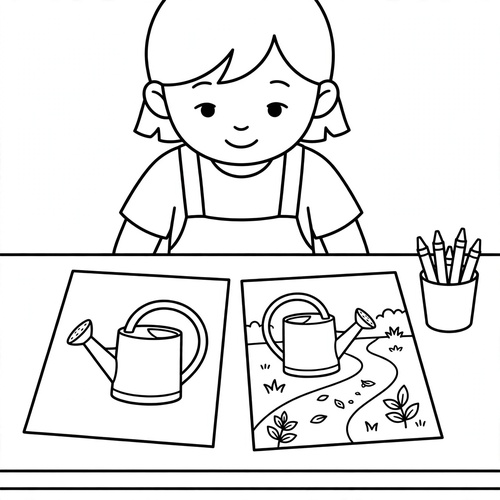
Child comparing watering can close-up and garden scene
2. Compare a near view with a wider frame
Framing changes how much of a subject and its surroundings appears. When looking through free coloring pages pdf, compare what each candidate reveals while keeping detail, effort, and the number of subjects separate from the near-or-wide distinction.
2.1 Choose closeness when a particular feature matters
A near frame may make a leaf arrangement, vessel handle, or creature’s visible profile easier to inspect. Check whether the specific feature you want is actually depicted. Closeness does not guarantee fine detail.
If your interest lies in a handle and its connection to a vessel, a candidate that clearly shows both may fit better than another that shows more surroundings but obscures that connection. Choose for the visible feature rather than the label close-up alone.
2.2 Choose a wider frame when surrounding relationships matter
A wider frame may reveal how a plant sits near an object or where a subject stands beside a path. Wider does not mean crowded; a few well-separated elements can occupy a broad setting.
A parent once compared two hypothetical boat drawings with a child before a quiet afternoon activity. One showed the boat closely from the side, while the other placed it farther away beside reeds and curved water. The child chose the wider scene because the reeds were part of what made the picture interesting. The decision was about the visible relationship, not which image contained more detail.
3. Compare side views and views from above
Viewing position changes which profiles, surfaces, and relative positions are visible.
3.1 Notice profile, height and overlapping parts from the side
A side depiction of a vessel can show its outer profile and how high its handle or spout reaches. An upright plant may reveal the stem and the way leaves overlap along it. Look at those visible relationships in the candidate you are considering.
The side view may conceal an opening or upper surfaces, so identify that limit as well. You do not need to infer the hidden side or work out vanishing points. The useful question is whether the pictured profile and height are what interest you now.
3.2 Notice surfaces and relative positions from above
A view from above may show a vessel opening, the tops of leaves, or how objects sit relative to one another on a surface. A boat seen overhead can reveal different parts from a side depiction.
Neither view is automatically harder or better. If upper surfaces are your main interest, choose a drawing that actually includes them.
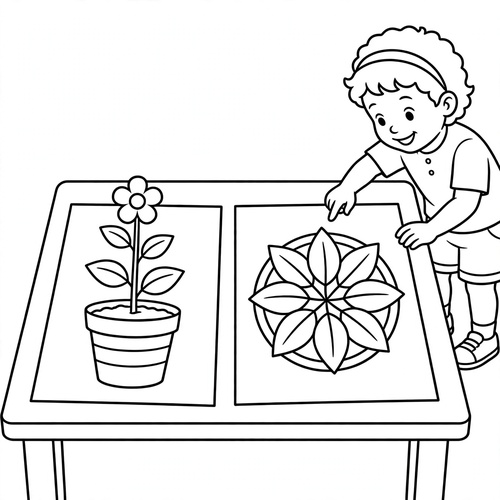
Kid comparing side and top views of potted plant pages
Find More Information:
ColoringPagesCreative Brings Free Pages and Happy Breaks
Printable Coloring Sheets For Cozy Days Full Of Color And Joy
4. Explore coloring pages with a view in mind
ColoringPagesCreative is a resource for browsing coloring pages through broad collections and discovery sections. Browse with the view you want in mind, then inspect how an individual drawing presents its subject.
A close view may reveal one feature, while a wider frame may show relationships around it. A side view and a view from above can make different parts visible even when the subject stays the same. Open the individual resource before preparing your choice, and check the available format, stated guidance, and current use details.
4.1 Use ColoringPagesCreative as a broad starting point
Begin with observed collections and discovery sections, then inspect the view and frame of individual drawings.
No viewpoint filter, perspective control, or cropping feature is needed for this comparison, and none should be assumed. Keep hypothetical examples distinct from current inventory and let the actual candidates determine which views are available.
4.2 Inspect how the chosen resource actually presents the subject
Before preparing the resource, confirm the wanted feature in the actual drawing and inspect its current availability, offered format, and relevant use details. You are selecting an existing depiction rather than rotating, editing, or redrawing a file.
If the resource does not present the part you hoped to see, choose another candidate or reconsider which visible relationship matters. A thumbnail or broad subject label does not establish the exact view or preparation option you need.
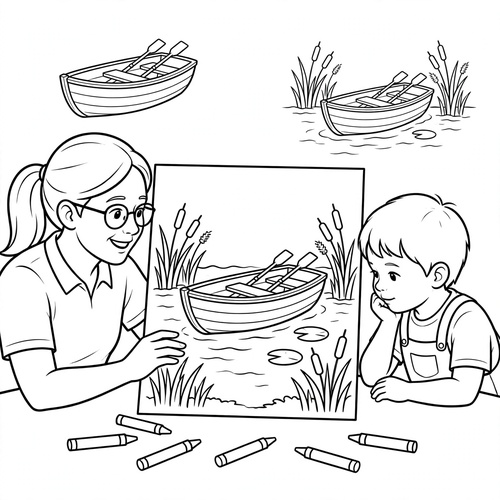
Parent and child selecting wide rowboat view with reeds
5. Choose the view that shows what matters to you
Finish the comparison with a visible selection criterion. The same principle applies when reviewing free coloring pages to print: the useful candidate is the one that reveals the feature or relationship you care about now, without requiring you to collect every viewpoint.
5.1 Compare views while keeping the main interest steady
Hold the subject or relationship steady where possible and state what you want shown. You might choose the pot opening over stem height today, or prefer the visible profile of a boat over its interior. Either criterion can guide a clear comparison.
If two drawings show the same broad subject differently, compare the feature relevant to the current choice. This prevents framing, detail level, or surrounding objects from replacing your actual interest.
5.2 Keep either view when both serve a different purpose
Two views may appeal for different reasons. Choose the one that serves your present interest and leave the other optional. You can return to it when its particular visible feature becomes what you want.
The goal is to notice an appealing depiction rather than accumulate viewpoints or force an unfamiliar choice.
Compare coloring pages by what their viewpoints and frames reveal. Look at near and wider depictions, or side and overhead views, while keeping your main interest clear. Choose the drawing that shows the parts, surfaces, or relationships you most want to explore today.